

OPINION!!Unmasking the Economic Potential and Cultural Heritage of the Ukwa People Through the Visit of Her Excellency, Senator Oluremi Tinubu, to the Akwete Weaving Centre

Unmasking the Economic Potential and Cultural Heritage of the Ukwa People Through the Visit of Her Excellency, Senator Oluremi Tinubu, to the Akwete Weaving Centre
Introduction
The scheduled visit of Nigeria’s First Lady, Her Excellency Senator Oluremi Tinubu, to the historic Akwete Weaving Centre in Ukwa East Local Government Area of Abia State on Tuesday, 21 July 2026, is more than a ceremonial engagement. It is a significant national recognition of one of Nigeria’s oldest surviving indigenous industries and an opportunity to showcase the rich cultural heritage, economic potential, and entrepreneurial ingenuity of the Ukwa people.
For decades, Akwete cloth has stood as a symbol of African craftsmanship, yet the story behind its origin, the resilience of its weavers, and its enormous contribution to Nigeria’s cultural economy have remained largely underreported. The First Lady’s visit therefore provides an opportunity not only to celebrate this remarkable heritage but also to stimulate renewed interest in preserving and commercialising one of Nigeria’s finest indigenous textile traditions.
The Ukwa People: A Historic Commercial and Cultural Crossroads
The Ukwa people trace their ancestry to the ancient Igbo migrations into the Niger Delta hinterland. Owing to their strategic location between the Igbo hinterland and the coastal communities of present-day Rivers State, they emerged as important intermediaries in regional commerce centuries before colonial rule. Their close interactions with neighbouring Ibani, Kalabari, Okrika, and Ijaw communities profoundly shaped their economy, culture, and social development. Today, the Ukwa people occupy the southern part of Abia State, comprising Ukwa East and Ukwa West Local Government Areas, traditionally known as Ndoki and Asa. They share boundaries with communities in Abia, Rivers, Akwa Ibom, and Imo States, making them one of the most strategically located ethnic groups in southeastern Nigeria.
This unique geographical position transformed Ukwa into a thriving commercial corridor where palm oil, palm kernels, fish, salt, agricultural produce, crafts, and textiles, including the world-renowned Akwete cloth, were exchanged long before colonial administration. These commercial interactions enriched the culture of the Ukwa people while preserving their distinct Igbo identity. Today, Ukwa remains both a cultural bridge and an economic gateway linking southeastern Nigeria with the Niger Delta, reflecting centuries of peaceful trade, cultural exchange, and entrepreneurial enterprise.
Akwete: The Cradle of Nigeria’s Finest Indigenous Textile
Among the communities that make up the Ndoki clan, Akwete occupies a unique place in Nigeria’s cultural history. Located in present-day Ukwa East Local Government Area of Abia State, Akwete has earned international recognition as the home of one of Africa’s oldest surviving indigenous weaving traditions. Indeed, the history of Akwete cannot be separated from the history of its famous weaving industry. Although various oral traditions explain the origin of the town’s name, there is broad agreement among historians that Akwete achieved prominence because of its exceptional textile industry. Over time, the town became so closely associated with its distinctive woven fabric that the cloth itself came to bear the name “Akwete.”
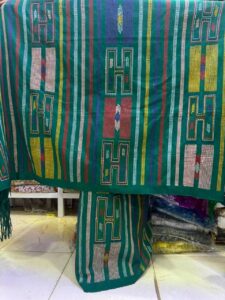
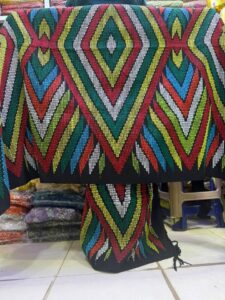
Situated close to the Imo River, Akwete historically served as an important commercial gateway connecting the Igbo hinterland with the Niger Delta. This strategic location enabled the community to flourish as a centre of commerce, attracting traders from neighbouring ethnic groups and facilitating the exchange of goods, skills, and artistic ideas. Although Akwete participated actively in the palm oil trade and other commercial activities, weaving remains its greatest cultural contribution. Historical evidence suggests that while weaving existed in several Igbo communities, it was the women of Akwete who transformed the craft into a highly sophisticated textile industry during the nineteenth century. By incorporating artistic influences acquired through trade with neighbouring Niger Delta communities, Akwete weavers developed distinctive patterns, vibrant colours, and intricate motifs that became highly sought after across West Africa.
The Origins and Evolution of Akwete Weaving
Akwete weaving is widely regarded as one of Nigeria’s oldest and most celebrated indigenous textile traditions. Originating from Akwete town in the Ndoki area of present-day Ukwa East Local Government Area, the craft has earned global recognition as one of Africa’s finest handwoven textile traditions and remains a powerful symbol of Igbo cultural identity. The precise origin of Akwete weaving predates written history and therefore remains uncertain. Nevertheless, oral traditions and historical scholarship agree that the craft has existed for several centuries. Some accounts trace weaving in Akwete to the pre-colonial era, while others attribute its remarkable transformation to a legendary woman, Dada Nwakwata, also known as Dada Nwakata. She is believed to have revolutionised the craft during the late nineteenth century by introducing wider looms, more elaborate designs, richer colour combinations, and intricate weaving techniques that distinguished Akwete cloth from other indigenous textiles. Regardless of these differing accounts, historical evidence confirms that Akwete weaving had already become a thriving industry by the mid-to-late nineteenth century and had established a reputation for excellence long before the twentieth century.
A Tradition Preserved by Women
Unlike many African weaving traditions that were dominated by men, Akwete weaving has historically been the exclusive preserve of women. Within the traditional division of labour in the Ukwa clan, women spun fibres, designed patterns, wove the fabrics, marketed finished products, and trained younger generations in the craft. Men, on the other hand, prepared and maintained the looms while sourcing raw materials required for production. This complementary arrangement ensured that the knowledge of weaving was carefully preserved and transmitted from mothers to daughters, making the craft not only an economic activity but also a vital instrument for safeguarding the community’s cultural identity. Initially, Akwete women produced textiles using raffia, sisal, hemp, and locally cultivated cotton. These materials were woven into wrappers, ceremonial cloths, towels, mats, robes, and bags for domestic use and trade. As commercial exchanges expanded across the Niger Delta, imported cotton yarns and brightly coloured threads became available, enabling weavers to create increasingly sophisticated designs that elevated Akwete cloth to international acclaim. The growing demand for the fabric attracted merchants from neighbouring Ijaw, Ibani, Kalabari, and Okrika communities, many of whom commissioned customised designs and established trading relationships with Akwete artisans. Some merchants even settled permanently in the town, further transforming Akwete into one of the foremost indigenous textile centres in West Africa.
Akwete Cloth: A Symbol of Prestige, Identity and Artistic Excellence
Beyond its commercial value, Akwete cloth occupies a unique place in the cultural life of the Igbo people. For generations, it has been worn during marriages, coronations, title-taking ceremonies, burials, festivals, and traditional religious rites, making it far more than an ordinary fabric. It is a symbol of honour, dignity, prosperity, leadership, and cultural identity. One of the defining characteristics of Akwete cloth is its intricate geometric motifs, vibrant colours, and richly textured patterns. Every design tells a story, reflecting values such as fertility, wealth, family, royalty, spirituality, and harmony with nature. Among the most celebrated traditional patterns is Ikaki (“Turtle”), a design believed to have evolved from motifs introduced through trade with neighbouring Niger Delta communities. Rather than merely copying foreign designs, Akwete weavers refined and transformed them into distinctly indigenous artistic expressions that became synonymous with the community’s identity. Today, more than fifty traditional Akwete patterns have been documented, each possessing its own historical and cultural significance. These patterns continue to distinguish Akwete cloth from other African textiles and underscore the remarkable creativity of its artisans.
Unlike the horizontal looms commonly used in many parts of West Africa, Akwete weavers employ a distinctive vertical loom that enables them to produce broad wrappers, double-faced fabrics, complex geometric motifs, and richly textured ceremonial cloths of exceptional quality. When imported cotton, silk, and rayon became available during the colonial era, Akwete women embraced these materials without abandoning their traditional techniques. Instead, they integrated modern yarns into their weaving, creating brighter colours and more elaborate patterns while preserving the authenticity of their indigenous craftsmanship. This ability to innovate without sacrificing tradition remains one of the enduring strengths of Akwete weaving.
Akwete and the Palm Oil Economy
Although weaving brought Akwete international recognition, the community also played a significant role in the nineteenth-century palm oil economy that linked the Niger Delta with European merchants.
Its strategic location along the Imo River made Akwete an important trading post where agricultural produce, palm oil, palm kernels, fish, salt, and textiles were exchanged. Traders from the Igbo hinterland and coastal communities converged in Akwete, contributing to its emergence as one of the region’s leading commercial centres. Historical records also indicate that Akwete was among the coastal transit points associated with the transatlantic slave trade during the nineteenth century. Among the notable historical figures connected to this period was Jaja, who later rose to prominence as the renowned King Jaja of Opobo. Historical accounts suggest that he passed through Akwete as a youth before eventually becoming one of the most influential rulers and merchants in the Niger Delta. These historical connections further highlight Akwete’s significance in the economic and political history of southeastern Nigeria.
International Recognition of Akwete Weaving
Despite the decline of Nigeria’s textile industry in the late twentieth century, Akwete weaving survived through the resilience of local women, family enterprises, and weaving cooperatives that continued to preserve the craft. In recent years, the industry has witnessed renewed interest, driven by the global demand for handmade textiles, sustainable fashion, and indigenous African designs. Today, Nigerian fashion designers increasingly incorporate Akwete fabric into jackets, gowns, handbags, footwear, accessories, and luxury fashion collections. The fabric has become a favourite among designers seeking to combine contemporary fashion with traditional African aesthetics. Beyond the fashion industry, Akwete cloth has attracted the attention of museums, universities, historians, and cultural institutions around the world.
Prestigious institutions, including the British Museum in London and the Metropolitan Museum of Art in New York, preserve Akwete textiles in their collections, recognising their exceptional artistic, historical, and cultural significance. This international recognition demonstrates that Akwete cloth is not merely a local fabric but a globally respected cultural treasure.
Government Efforts to Preserve Akwete Weaving
Recognising the cultural and economic importance of Akwete weaving, successive colonial, regional, state, and federal governments have introduced various initiatives aimed at preserving, modernising, and commercialising the industry. Although these interventions have yielded positive results, many stakeholders believe they have not been sufficiently sustained to unlock the industry’s full economic potential.
Colonial Administration (Late Nineteenth Century–1960)
During the colonial period, British administrators recognised the commercial value of Akwete cloth and introduced measures to improve production and expand its market.
Among the notable interventions were:
* The establishment of handloom weaving workshops in Akwete.
* The introduction of improved looms and weaving equipment.
* The importation of machine-spun cotton yarn to complement locally spun fibres.
* Technical training programmes facilitated by British textile experts.
These initiatives significantly improved the quality, durability, and colour variety of Akwete fabrics, making them more competitive within regional markets.
Eastern Nigeria and East Central State Governments (1960s–1970s)
Following Nigeria’s independence, the governments of Eastern Nigeria and later East Central State promoted indigenous crafts through cottage industry programmes designed to stimulate local economic development.
Their interventions included:
* Artisan training schemes.
* Support for weaving cooperative societies.
* Cultural festivals showcasing Akwete cloth.
* Promotion of indigenous textile production.
However, the Nigerian Civil War (1967–1970) severely disrupted production, destroyed markets, and interrupted commercial activities, slowing the growth of the weaving industry for several years.
Imo State Government (1976–1991)
Before the creation of Abia State in 1991, Akwete was part of the old Imo State. During this period, the state government promoted Akwete weaving through cultural exhibitions, vocational education programmes, and initiatives aimed at preserving indigenous textile production. These efforts contributed to keeping the tradition alive during a period when Nigeria’s textile industry was experiencing significant challenges.
Abia State Government (1991 to Date)
Since the creation of Abia State, successive administrations have consistently recognised Akwete weaving as one of the state’s most valuable cultural and economic assets. Government initiatives have included:
* Sponsorship of annual cultural festivals featuring Akwete cloth.
* Promotion of Akwete weaving at trade fairs and exhibitions.
* Support for women-owned weaving cooperatives.
* Skills acquisition and artisan development programmes.
* Marketing Akwete as a tourism and cultural heritage product.
* Encouraging greater participation in Nigeria’s creative economy.
In recent years, there has also been renewed emphasis on positioning Akwete cloth as a major component of Abia State’s cultural branding strategy and creative economy.
Federal Government Support
At the national level, the Federal Government has supported Akwete weaving through agencies such as the former Nigerian Crafts Council, the National Council for Arts and Culture, now under the Federal Ministry of Art, Culture, Tourism and the Creative Economy, and the Small and Medium Enterprises Development Agency of Nigeria (SMEDAN)
These institutions have:
* Promoted Akwete cloth at national cultural festivals.
* Sponsored artisans to participate in exhibitions within and outside Nigeria.
* Supported entrepreneurship and skills acquisition programmes.
* Encouraged the preservation of indigenous textile traditions.
Although these interventions have helped sustain national awareness of Akwete weaving, stakeholders continue to advocate for more consistent funding, stronger policy implementation, and long-term investment to enable the industry to compete effectively in global markets.
Challenges, Opportunities and the Significance of the First Lady’s Visit
Academic and Institutional Contributions
Beyond government interventions, universities, researchers, cultural institutions, and development organisations have played a vital role in preserving and promoting Akwete weaving. Over the years, scholars have documented the history of Akwete weaving, analysed its unique techniques and motifs, and highlighted its cultural and economic significance through books, academic journals, exhibitions, and conferences. Research has also recommended the inclusion of Akwete weaving in vocational education and secondary school curricula, while advocating the integration of modern design innovation with traditional weaving techniques. These efforts have helped preserve invaluable indigenous knowledge and encouraged wider appreciation of Akwete cloth within Nigeria and abroad. Experts generally agree that for Akwete weaving to remain competitive in today’s global economy, greater investment is needed in technology, entrepreneurship, digital marketing, design innovation, and skills development, while preserving the authenticity that distinguishes the craft.
Challenges Facing the Akwete Weaving Industry
Despite its rich history, growing international recognition, and decades of intervention by governments and development partners, the Akwete weaving industry continues to face significant challenges that limit its economic potential.
One of the major concerns is inadequate and inconsistent government funding. Many support programmes have been introduced over the years, but the absence of sustained investment has prevented the industry from achieving large-scale commercial growth. Competition from imported textiles and machine-produced fabrics has also affected demand for handmade Akwete cloth. While handcrafted textiles command higher value because of their quality and uniqueness, they are more time-consuming and expensive to produce, making them less competitive in price-sensitive markets. Another pressing challenge is the ageing population of master weavers. Many of the custodians of the craft are elderly, while fewer young people are willing to learn the painstaking art of traditional weaving. Without deliberate efforts to train a new generation of artisans, there is a risk that valuable indigenous knowledge could gradually disappear. The industry is further constrained by limited access to modern weaving equipment, affordable financing, and improved production facilities. Weak branding, inadequate marketing strategies, and limited export infrastructure have also prevented Akwete cloth from reaching its full commercial potential in international markets. Poor infrastructure, including unreliable electricity, inadequate road networks, limited digital connectivity, and insufficient tourism facilities, continues to hinder productivity and reduce the competitiveness of local weavers. These challenges underscore the urgent need for coordinated action involving government, the private sector, development agencies, and cultural institutions.
Unlocking the Full Potential of Akwete Weaving
Stakeholders have consistently proposed several measures to reposition Akwete weaving as a globally competitive cultural and economic enterprise.
Among the most frequently recommended initiatives are:
* The establishment of a dedicated Akwete Textile Development Centre to serve as a hub for training, innovation, research, and production.
* Expansion of vocational education programmes to encourage young people to learn the craft.
* Strengthening of weaving cooperatives to improve access to finance, equipment, and markets.
* Development of stronger partnerships between government and the private sector.
* Improved branding and international marketing of Akwete cloth.
* Expansion of export promotion initiatives.
* Investment in tourism infrastructure to transform Akwete into a major cultural tourism destination.
* Greater integration of Akwete weaving into Nigeria’s creative economy and fashion industry.
If implemented effectively, these measures could significantly increase employment, stimulate local economic development, preserve cultural heritage, and enhance Nigeria’s global reputation in the creative industries.
The Significance of Senator Oluremi Tinubu’s Visit
Against this historical background, the scheduled visit of Nigeria’s First Lady, Her Excellency Senator Oluremi Tinubu, to the Akwete Weaving Centre on Tuesday, 21 July 2026, carries significance far beyond a ceremonial engagement. As the wife of President Bola Ahmed Tinubu and a former Senator who represented Lagos Central Senatorial District from 2011 to 2023, Senator Oluremi Tinubu occupies a unique national platform from which to promote cultural preservation, women’s empowerment, and community development.
Her visit represents national recognition of the creativity, resilience, and entrepreneurial spirit that have sustained the Akwete weaving tradition for generations. It also offers an opportunity to draw national and international attention to an industry that has the capacity to contribute meaningfully to Nigeria’s economic diversification. For the Ukwa people, the visit is a moment of pride and an opportunity to showcase their hospitality, cultural richness, craftsmanship, and enduring entrepreneurial tradition to the nation and the international community.
Potential Impact of the First Lady’s Visit
If followed by concrete policy initiatives and strategic investments, the First Lady’s visit could catalyze the transformation of Akwete weaving thus;
1. Increased National and International Visibility
The visit is expected to attract significant media attention, creating greater awareness of Akwete weaving among tourists, investors, development agencies, fashion designers, cultural institutions, and international buyers.
2. Preservation of Cultural Heritage
National recognition of Akwete weaving could encourage younger generations to embrace the craft, ensuring that centuries-old indigenous knowledge is preserved for future generations.
3. Women’s Economic Empowerment
Given that Akwete weaving has traditionally been sustained by women, increased government support through grants, improved equipment, access to finance, and entrepreneurship programmes would strengthen women-owned enterprises and improve household incomes.
4. Expansion of Market Opportunities
The visit could stimulate greater demand for Akwete cloth through government patronage, corporate branding, hospitality, fashion, interior decoration, and export markets.
5. Increased Government Investment
Renewed national attention could encourage federal and state governments to invest in modern weaving centres, vocational education, improved equipment, export promotion, research, and business development.
6. Tourism Development
Akwete has the potential to become one of Nigeria’s leading cultural tourism destinations, attracting visitors interested in indigenous arts, heritage, and traditional craftsmanship. Such growth would also benefit hotels, restaurants, transport operators, and other local businesses.
7. Youth Employment and Skills Development
With structured apprenticeship programmes and entrepreneurship initiatives, the weaving industry could create meaningful employment opportunities for young people while preserving traditional skills.
8. Strengthening Nigeria’s Creative Economy
Greater collaboration between Akwete weavers, fashion designers, textile manufacturers, and creative entrepreneurs would expand opportunities within Nigeria’s rapidly growing creative economy.
9. Infrastructure Development
Heightened government interest may accelerate investment in roads, electricity, water supply, internet connectivity, and other infrastructure essential for the growth of the weaving industry.
10. Policy and Legal Reforms
The visit could also stimulate discussions on securing Geographical Indication (GI) status for Akwete cloth, strengthening intellectual property protection for traditional designs, encouraging local textile production, and integrating indigenous textile studies into national educational curricula.
A Historic Opportunity for Cultural Renaissance and Economic Transformation
The scheduled visit of Her Excellency, Senator Oluremi Tinubu, to the Akwete Weaving Centre should be viewed not merely as an official engagement, but as a historic opportunity to reposition one of Nigeria’s oldest indigenous industries for sustainable growth and global recognition. For centuries, Akwete weaving has survived political transitions, economic downturns, colonial rule, the Nigerian Civil War, industrialization, and the influx of imported textiles. Yet the craft has endured because of the resilience, creativity, and determination of generations of Akwete women who have preserved this priceless cultural inheritance. Today, the challenge extends beyond preserving tradition. It is about transforming an ancient craft into a modern creative enterprise capable of competing in international markets while retaining its authenticity. Across the world, countries have successfully converted indigenous crafts into thriving industries that generate employment, attract tourism, and earn foreign exchange. Nations such as India, Japan, Morocco, and Ghana have demonstrated that cultural heritage can become a powerful driver of economic development when supported by deliberate government policies, strategic investments, innovation, and effective branding. Nigeria possesses a similar opportunity through Akwete weaving. With appropriate investment in modern production facilities, vocational training, research, digital marketing, export promotion, tourism infrastructure, and intellectual property protection, Akwete cloth can become one of Nigeria’s most recognisable cultural exports. Beyond its commercial value, the industry has enormous social and developmental benefits. It offers opportunities for women’s economic empowerment, youth employment, skills acquisition, entrepreneurship, cultural diplomacy, and the preservation of indigenous knowledge. The future of Akwete weaving therefore depends on collective action by governments at all levels, traditional institutions, private investors, development partners, educational institutions, and the people of Ukwa themselves.
A sustainable development strategy should include the establishment of an Akwete Textile Development Centre, improved access to finance for artisans, expansion of apprenticeship programmes, stronger cooperative societies, investment in tourism infrastructure, and partnerships with universities, fashion designers, textile manufacturers, and international cultural organisations. Equally important is the need to strengthen the branding of Akwete cloth as a premium indigenous textile capable of competing in both local and international markets. In today’s digital economy, online marketing platforms, e-commerce, documentary filmmaking, and cultural exhibitions offer unprecedented opportunities to introduce Akwete weaving to new audiences worldwide.
The visit by the First Lady provides a timely platform to initiate these conversations and mobilise the partnerships required to achieve them. For the Ukwa people, this is more than a moment of celebration; it is an opportunity to reaffirm their place in Nigeria’s cultural and economic history. It is also a chance to demonstrate that indigenous knowledge, when properly nurtured, remains a valuable resource for national development. The significance of Akwete weaving extends beyond the boundaries of Ukwa East or Abia State. It represents the enduring ingenuity of the Igbo people, the resilience of Nigerian women, and the richness of Africa’s cultural heritage. Every piece of Akwete cloth tells a story of craftsmanship, innovation, identity, and continuity across generations. As Nigeria continues to diversify its economy beyond oil, greater attention should be paid to sectors that combine culture with commerce. The creative economy has become one of the fastest-growing sectors globally, and Akwete weaving possesses many of the qualities needed to become one of Nigeria’s flagship cultural industries. The First Lady’s visit should therefore serve as the beginning of a broader national commitment to preserving, promoting, and commercialising Akwete weaving. Such a commitment would not only safeguard an important aspect of Nigeria’s cultural heritage but also create employment, stimulate rural industrialization, empower women, attract investment, expand tourism, and generate foreign exchange.
Conclusion
The story of Akwete weaving is ultimately the story of the Ukwa people, a story of resilience, creativity, enterprise, and cultural pride. For centuries, the people transformed local resources, inherited skills, and cross-cultural exchanges into one of Africa’s most celebrated indigenous textile traditions. Their legacy has endured because each generation recognised the importance of preserving a craft that embodies both identity and livelihood.
Her Excellency Senator Oluremi Tinubu’s visit to the Akwete Weaving Centre offers an opportunity to elevate that legacy to a new level. It is a moment to move beyond symbolic recognition and embrace practical measures that will strengthen the industry through sustained investment, innovation, infrastructure, policy support, and strategic partnerships. If this visit inspires meaningful action, it could mark the beginning of a new chapter for Akwete weaving, one in which the craft evolves from a cherished cultural tradition into a globally competitive creative industry that generates employment, empowers women and young people, promotes tourism, and contributes significantly to Nigeria’s economic diversification. For the Ukwa people, the visit is both a recognition of their remarkable past and an invitation to shape an even brighter future. For Abia State and Nigeria, it is a reminder that some of the nation’s greatest economic opportunities lie not only in natural resources but also in the creativity, heritage, and resilience of its people.
As the nation turns its attention to Akwete on 21 July 2026, history offers an important lesson: when cultural heritage is matched with visionary leadership, strategic investment, and sustained commitment, it becomes far more than a relic of the past; it becomes a catalyst for national development and global recognition.
Scripted by;
Felix, Chidubem Ambition, PhD(in view)
Lecturer, Researcher, Public Affairs Analyst, Media Practitioner, and Community Leader
20/7/2026
