
Rep Emeka Atuma Outlines Vision For Constituency Representation, Sustainable Youth Empowerment

The All Progressives Congress (APC), Senatorial Candidate for Abia Central, Rep. Emeka Atuma, has outlined his proposed approach to constituency representation, infrastructure development and youth empowerment, identifying regular grassroots engagement, effective legislative advocacy and access to sustainable career opportunities as key priorities.
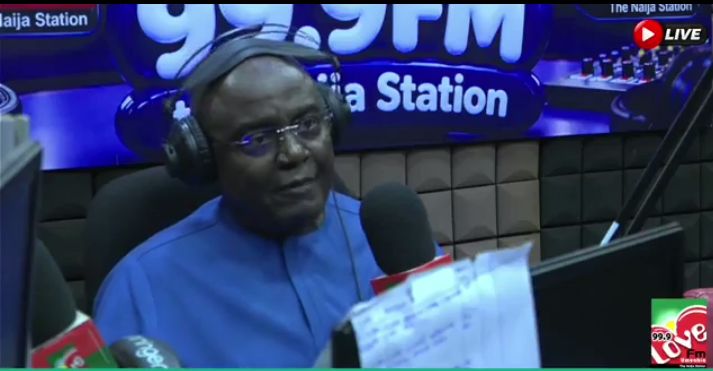
Atuma made the remarks while featuring on” EMEKA ATUMA SPEAKS”, a radio programme broadcast live on Family Love 99.9 FM, Flo 94.9 FM, DON 103.7 FM, and Magic 102.9 FM.
Speaking on constituency projects, Atuma explained that development priorities would emerge from continuous consultation with communities, traditional rulers, local leaders and other stakeholders. He said his needs-assessment engagements were intended to establish the actual priorities of communities rather than impose projects that might not address their immediate challenges.
He noted that constituency projects are pursued through the National Assembly’s appropriation process and relevant government ministries and agencies.
According to him, effective representation requires legislators to understand the budget process, engage agency leadership and consistently advocate for projects that respond to the needs of their constituents.
Reflecting on his previous four-year tenure in the House of Representatives, Atuma recalled engaging the Niger Delta Development Commission (NDDC), education authorities and the Federal Ministry of Power to attract interventions in roads, schools and rural electrification. He said these efforts included road construction, classroom interventions and electricity extensions to previously underserved communities in Ikwuano and Umuahia.
On extending such interventions across the six local government areas of Abia Central, he proposed establishing a functional constituency office with an administrative structure that would accommodate all 62 wards in the senatorial district.
He further stated that the office would serve as a regular meeting point for constituents, community representatives and stakeholders, while providing a channel for gathering information and communicating local priorities to the National Assembly and relevant government institutions.
Atuma also addressed concerns about elected representatives becoming inaccessible after assuming office. He vowed to maintain weekly contact with the constituency and said he had retained the same telephone number for 24 years, including throughout his previous legislative tenure.
He also revealed that he had previously operated an advisory council whose members were encouraged to criticize his actions and identify areas requiring improvement. He said he preferred honest feedback to praise-singing, pointing that representation should be guided by accountability, trust and responsiveness.
On youth empowerment, Atuma advocated a broader approach that recognizes the different skills, educational backgrounds and career aspirations of young people. He argued that graduates should have access to opportunities suited to their qualifications, including recruitment into federal institutions and agencies such as the Central Bank of Nigeria and the Nigerian National Petroleum Company.
He also identified agribusiness and technology as important areas for youth development, proposing partnerships with civil society organizations, non-governmental organizations and international institutions to facilitate specialized training and exposure.
Atuma maintained that empowerment should extend beyond the distribution of motorcycles, vehicles and other items to include opportunities that enable young people to establish sustainable careers, support families and contribute to society. He recalled that his previous interventions in agriculture and transportation were directed at beneficiaries already engaged in those fields.
The interview programme also featured questions from listeners on legislative leadership, political affiliation, presidential economic policies and the accessibility of elected representatives. Responding to a question on majority and minority positions in the National Assembly, Atuma explained that the majority side controls voting and plays a significant role in legislative decisions, including appropriation and lawmaking.
He also defended President Bola Ahmed Tinubu’s economic reforms, particularly the removal of fuel subsidy, describing the decision as difficult but necessary. While acknowledging the hardship associated with rising transportation and living costs, he expressed the believe that the reforms would produce improved economic outcomes, provided state governments complemented federal government efforts.
In his closing remarks, Atuma urged Abia Central voters to assess representation through integrity, accessibility, commitment to promises and equitable attention to the needs of constituents.
The programme, EMEKA ATUMA SPEAKS provided an opportunity for the candidate to explain his views on legislative representation, constituency development and the responsibilities attached to public office.
By Godwin Iroadighiogu
@ Emeka Atuma Media.
